Two people express interest, vaguely agree to go out, and somehow never choose a time or place. The Review Board investigates the strange romantic limbo known as the almost-date.
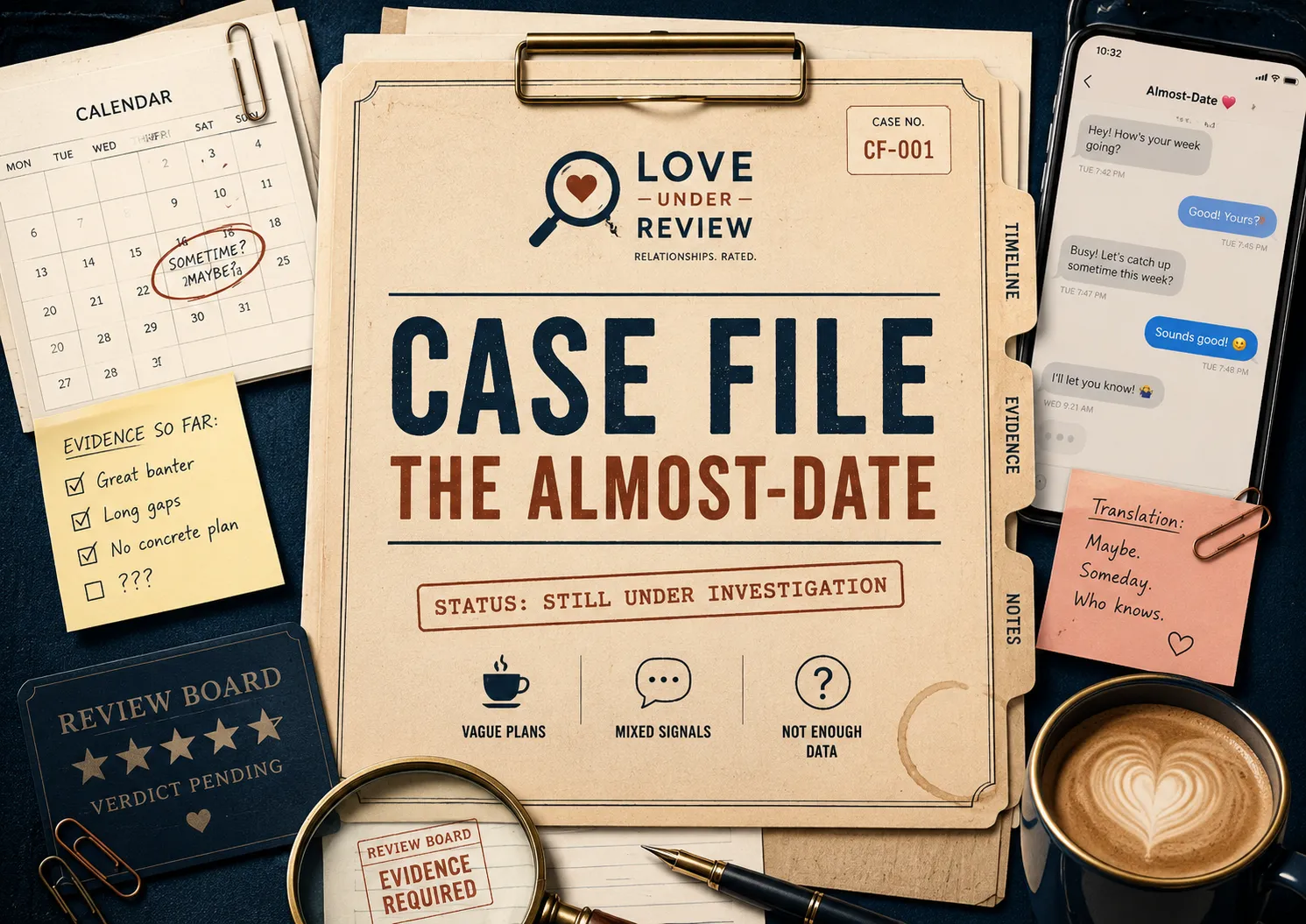
Case Number: CF-001 Subject: The Almost-Date Classification: Unconfirmed Romantic Event Current Status: Pending supporting documentation
Some dates go well. Some dates go badly. Some dates get canceled.
The almost-date achieves something more impressive: it creates anticipation without ever creating an actual event.
Nobody technically stood anyone up because nobody technically confirmed anything. This is administratively convenient and emotionally ridiculous.
Incident Summary
Two people talk. The conversation appears promising. Flirting may be present. Someone eventually says:
“We should do something sometime.”
The other person responds positively. A restaurant, activity, or general weekend may even be mentioned.
Then the plan enters the fog.
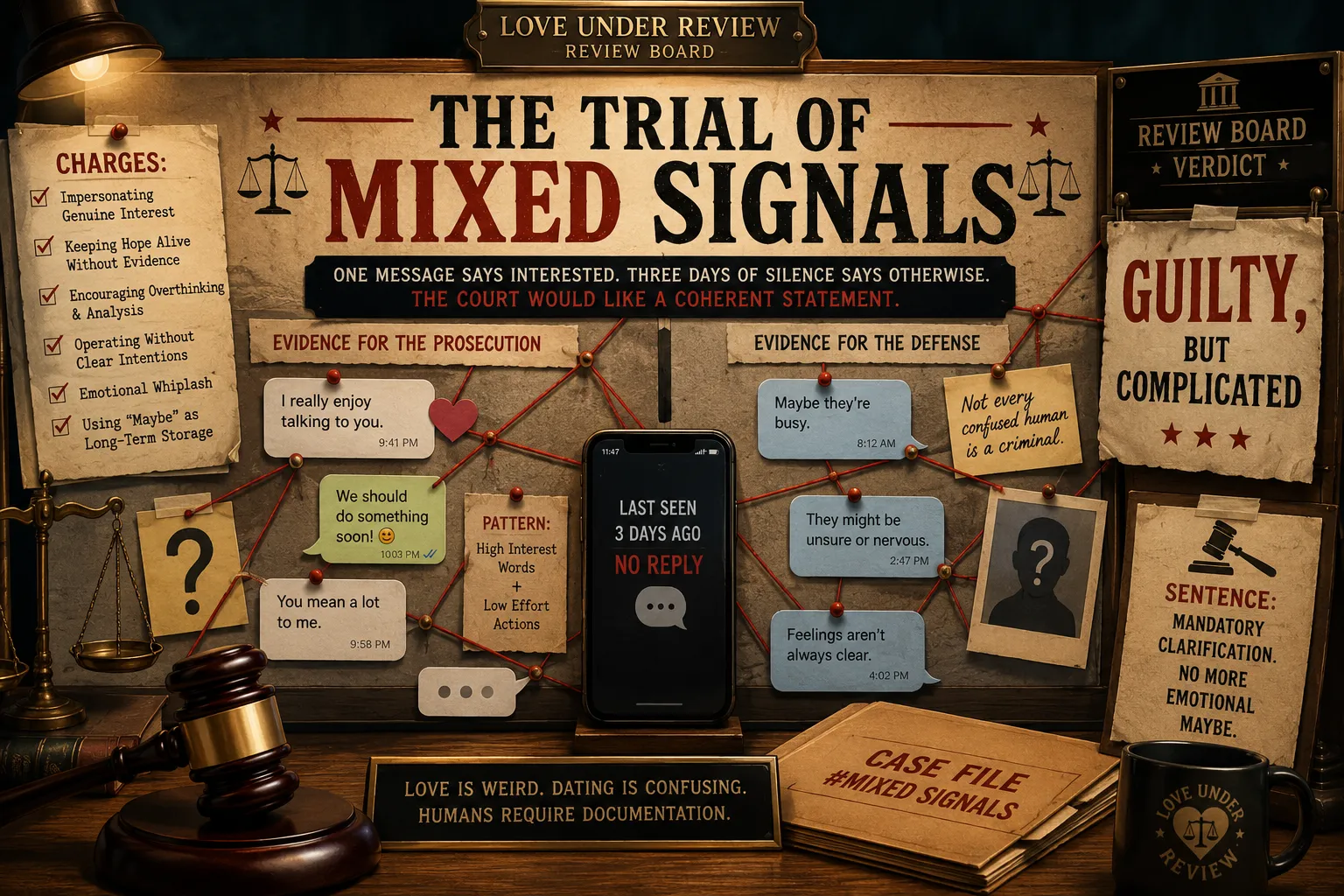
No time is chosen. No location is confirmed. One person waits for the other to make the next move. Both may continue talking as though an outing is still somewhere on the horizon.
The calendar, however, receives no evidence.
Suspected Cause
The almost-date is commonly caused by one or more of the following conditions:
- Genuine interest paired with poor follow-through.
- Polite enthusiasm that was never intended to become a plan.
- Fear of appearing too eager.
- Mutual uncertainty about who should confirm.
- A desire to keep the possibility alive without accepting the responsibility of making it real.
- The belief that “sometime” is an actual date and not a word-shaped escape hatch.
This is how two adults can express interest, agree in principle, and still fail to occupy the same physical location.
Common Symptoms
Known symptoms include:
- Re-reading “we should hang out” as though hidden scheduling information may eventually appear.
- Keeping part of the weekend emotionally reserved.
- Avoiding other plans because the almost-date might suddenly become real.
- Refusing to ask directly because it might seem “too eager.”
- Receiving a casual message after the proposed day has passed, with no mention of the missing plan.
- Explaining the situation to a friend using more evidence than the event itself contained.
- Saying, “We were supposed to go out,” despite possessing no confirmed time, place, or calendar entry.
In advanced cases, the almost-date may survive for several weeks through occasional flirting and repeated references to things the two people should eventually do.
Risk Assessment
Risk Level: Moderate
One almost-date may be caused by nervousness, disorganization, conflicting schedules, or an honest misunderstanding.
A repeating pattern is more concerning.
Repeated almost-dates can create a connection where anticipation performs all the emotional labor while reality never clocks in. The possibility remains exciting because it is never required to survive an actual meeting, an awkward silence, or the question of who is paying for appetizers.
The primary risk is not heartbreak from a date that went badly.
It is attachment to the potential of a date that never had to prove anything.
Recommended Handling
Interest should be evaluated by what it begins producing.
“Let’s get coffee sometime” is not a date.
“Are you free for coffee at 2:00 on Saturday?” is a date-shaped object awaiting confirmation.
A single direct follow-up is reasonable:
“Are we still thinking Saturday? I can do 2:00 or 4:00.”
This is not desperation. It is basic scheduling.
Once a clear opportunity to confirm has been provided, the evidence belongs to the other person. There is no need to translate vague messages, study response times, or convene an emergency panel of friends.
A person does not need perfect certainty to make a plan. They need enough interest to choose a time.
Review Board Finding
The almost-date is not automatically a rejection.
People become busy. People get nervous. People miscommunicate. Some people are genuinely interested but astonishingly bad at moving a conversation toward reality.
Context should therefore be admitted into evidence.
However, repeated vagueness should not receive the emotional benefits of actual effort.
Potential may enter the courtroom.
It may not deliver the verdict.
Review Status
Still Under Investigation
The file may be closed when one of the following occurs:
- A real date is confirmed.
- One person clearly declines.
- Both people acknowledge that the plan is not happening.
- The phrase “we should hang out sometime” expires from lack of supporting documentation.
Until then, the incident remains classified as an unconfirmed romantic event.
Final Case Note
An almost-date can be disappointing, but it still provides useful evidence.
Interest that never becomes action is information.
The calendar does not recognize chemistry without a time and place.